GigFuse
Simplifying how event planners discover and book local artists
Role
Product Designer
Industry
Entertainment & Education
Duration
4 Weeks
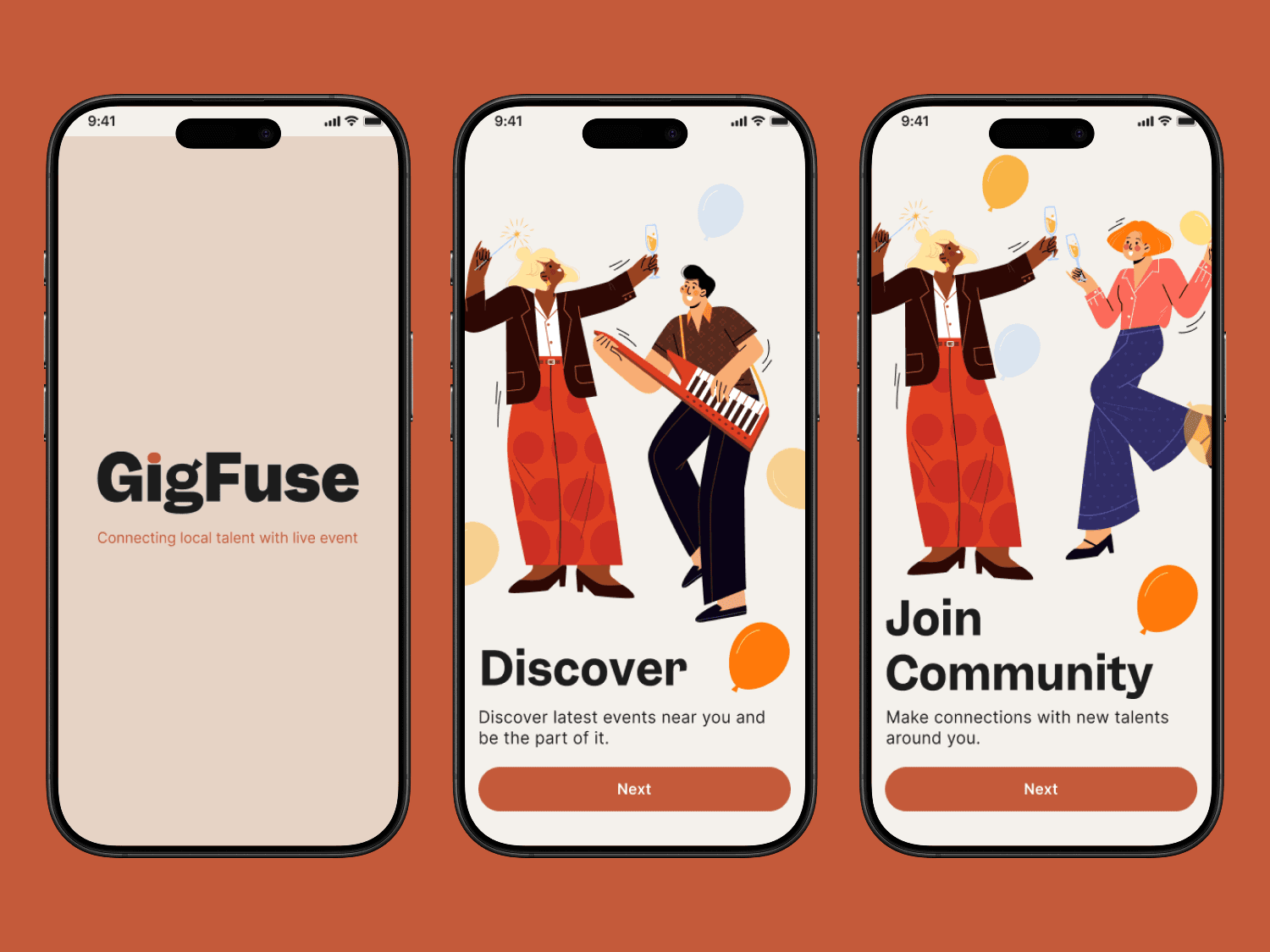
Booking local artists is often a fragmented process involving multiple platforms, unclear pricing, and unreliable communication. Event planners spend significant time shortlisting talent, while artists struggle to access consistent and relevant opportunities.
GigFuse was designed to bring structure, clarity, and confidence to this process.
Problem Statement
Event planners find it time-consuming to discover reliable local talent
Artist profiles lack transparency around availability and expectations
Communication gaps lead to delays, cancellations, and missed opportunities
Goals
Simplify artist discovery and booking
Build trust between planners and artists
Reduce coordination effort and decision fatigue
Create a scalable system for both sides of the marketplace
Target Users
Targeted users are event planners, organisers, and venue managers who need a reliable way to discover and book local talent. It also supports artists and event professionals seeking consistent, high-quality opportunities. The platform balances the needs of both sides to create confident, efficient bookings.
Research & Discovery
Research focused on understanding booking challenges faced by planners and visibility issues experienced by artists. Competitive analysis and journey mapping revealed gaps in trust, clarity, and communication. These insights shaped a streamlined, transparent booking experience.
Design Process
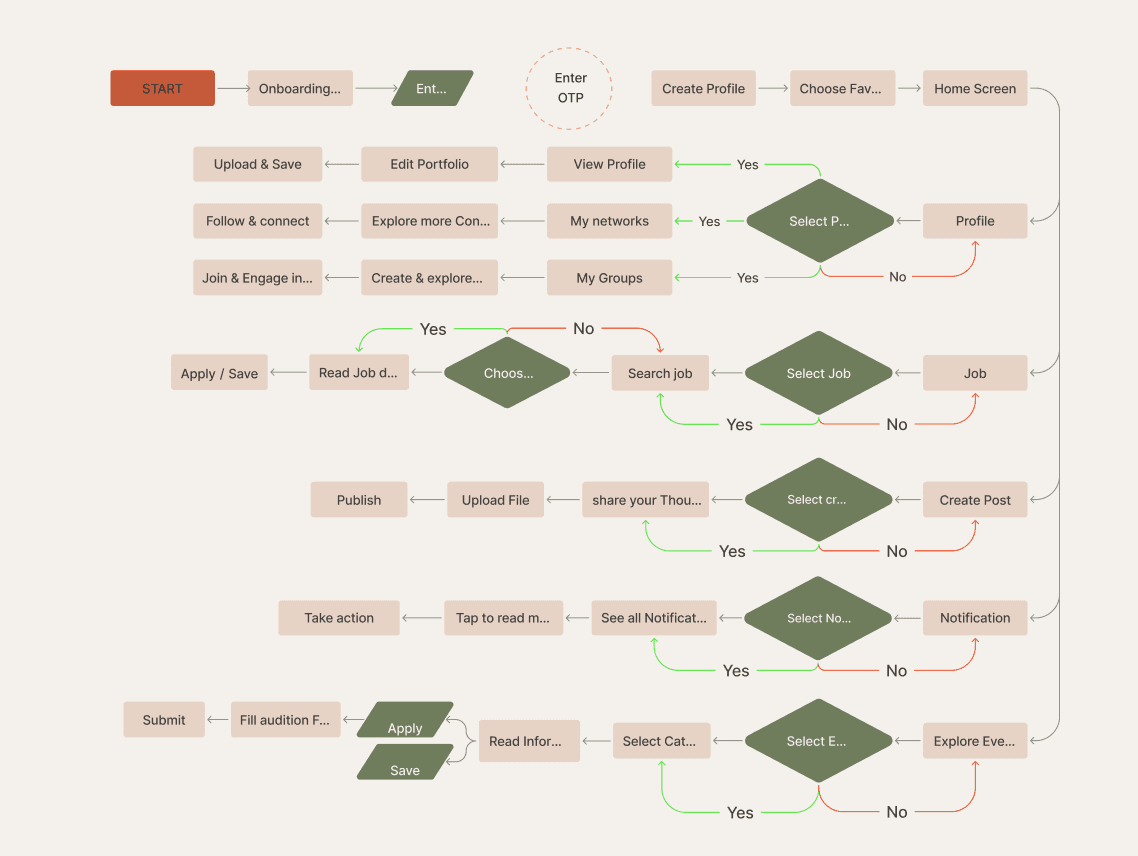
I followed a structured, user-centered design process that began with research and clearly defining the problem. Based on the insights, I explored ideas, mapped user flows, and structured the information architecture before moving into wireframes and high-fidelity UI. Throughout the process, I focused on clarity, trust, and ease of use, iterating the design to create a smooth end-to-end booking experience.
UI Design
I designed the interface with a focus on clarity, hierarchy, and trust, ensuring users could quickly scan information and make confident decisions.
The visual language balances creativity with professionalism through a warm color palette, strong typography, and a consistent component system. Each screen was designed to support the user’s next action without unnecessary friction.
Usability Testing
I validated key flows by reviewing the experience from both planner and artist perspectives, focusing on discovery, booking, and confirmation stages.
Testing helped uncover moments of hesitation around feedback states and booking clarity. Based on these insights, I refined layouts, microcopy, and interaction states to improve confidence and flow.
Outcomes
The final solution presents a structured and intuitive booking experience that reduces coordination effort for planners and improves visibility and opportunity quality for artists. By simplifying discovery and streamlining bookings, the product supports faster decision-making and more reliable event planning.
Learnings
This project reinforced the importance of designing for trust in marketplace products and balancing the needs of multiple user groups. I learned how clear structure, transparent information, and thoughtful feedback states can significantly reduce user friction. It also strengthened my ability to think end-to-end and make product-led design decisions.
Other projects
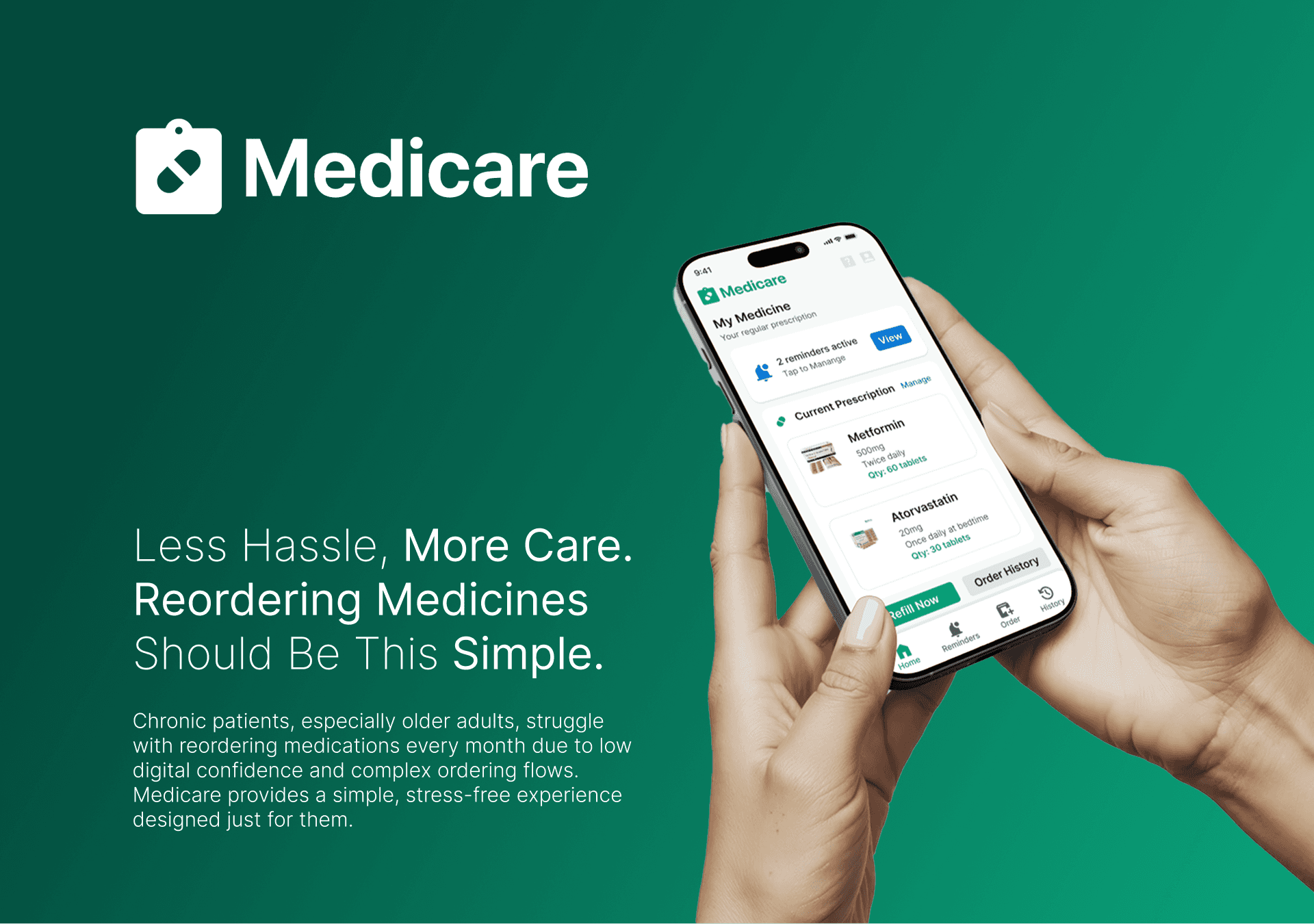
Medicare Application
Less Hassle, More Care. Reordering Medicines Should Be This Simple.

SpareVillage — UX Audit
SpareVillage is a B2B industrial e-commerce platform for spare parts and machinery. This UX audit identifies usability gaps affecting navigation clarity, product discovery, and buyer confidence.