Medicare Application
Less Hassle, More Care. Reordering Medicines Should Be This Simple.
Role
UX/UI Designer
Industry
Health Care
Duration
14 Weeks
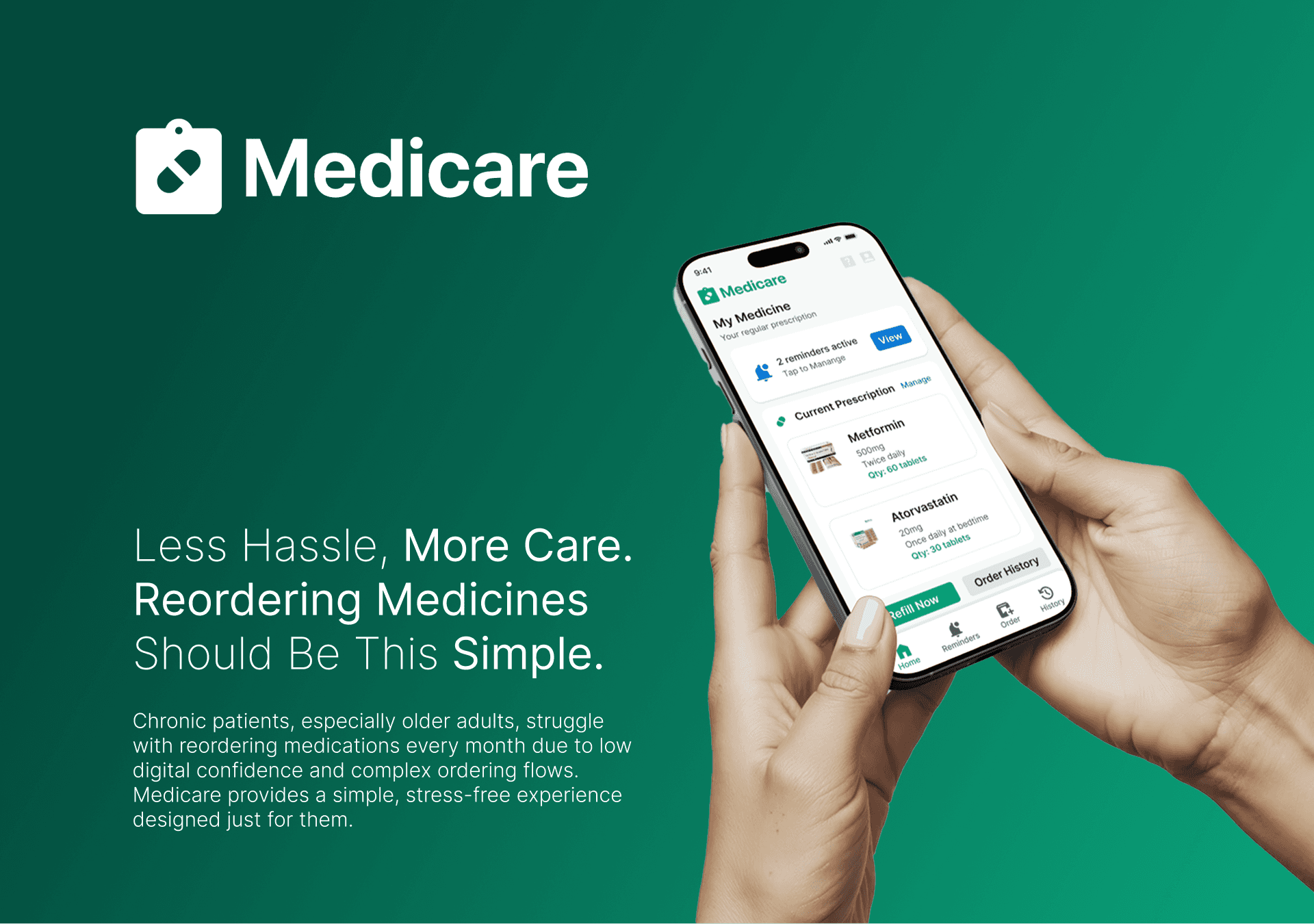
An easy-to-use app for monthly medicine reorder
Chronic patients, especially older adults, struggle with reordering medications every month due to low digital confidence and complex ordering flows. Medicare provides a simple, stress-free experience designed just for them.
Problem
Elderly users face difficulties while ordering medicines online due to:
Complex UI and multiple steps
Small text and low-contrast visuals
Fear of making mistakes
Forgetting pills
Difficulty managing prescription changes
Solution
Medicare enables users to:
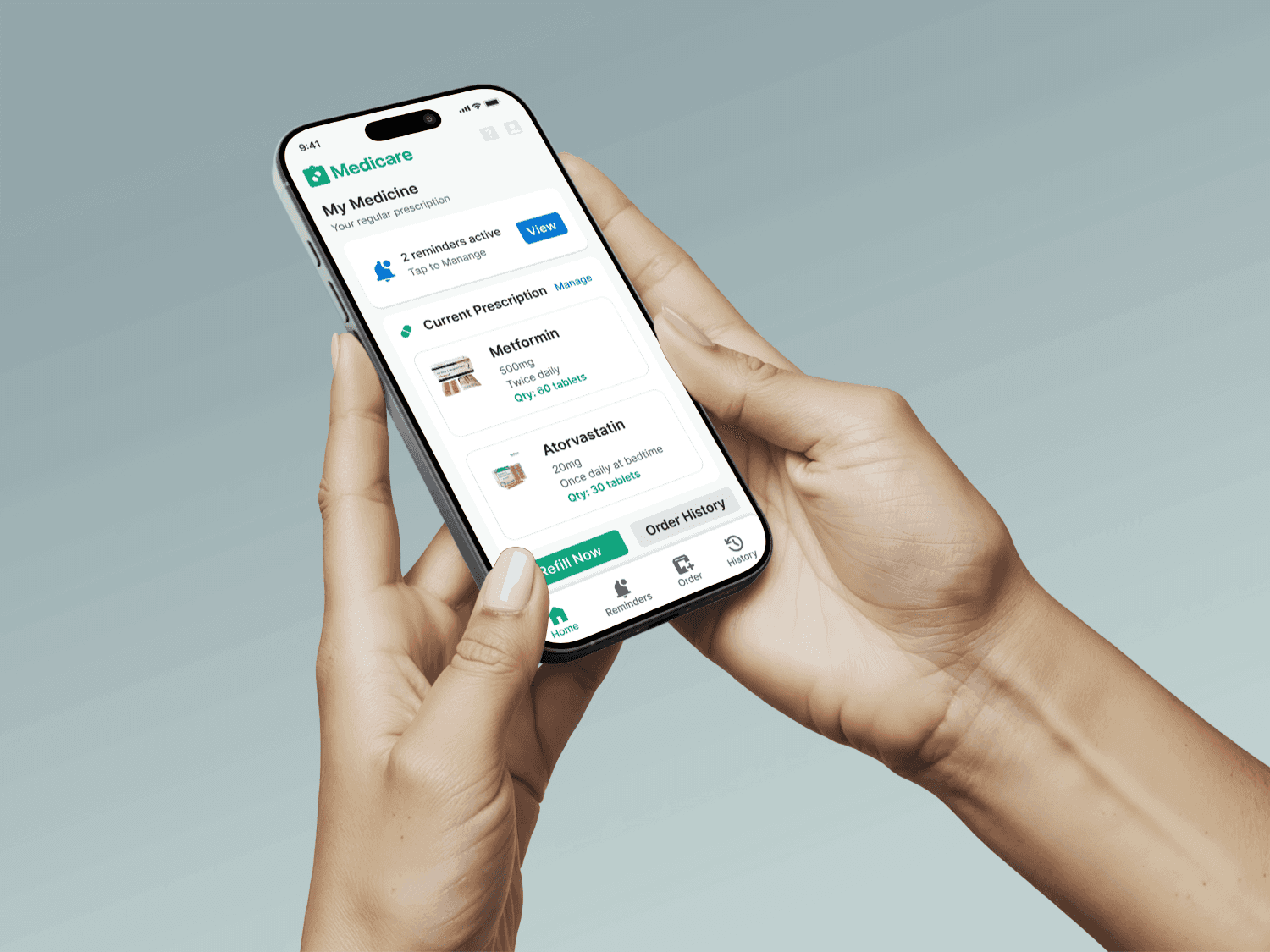
Add Reminder for medicines with a single tap
Store prescriptions securely
Edit medicines easily
Get refill reminders
Receive caregiver support when needed
Research & Understanding the Users
To understand the real challenges faced by chronic patients, especially older adults, I focused on identifying pain points around daily reminders, monthly medicine reordering and digital usability. The research highlighted that most users rely on fixed prescriptions that rarely change, yet they still struggle with complex ordering flows, small text, and fear of making mistakes. Many users expressed anxiety around missing doses or placing incorrect orders, making trust and clarity a critical design requirement.
Key Insights
Elderly users prefer familiarity over exploration and benefit from predictable, repeatable flows. Users wanted fewer decisions, clearer confirmations, and reassurance that their medicines were ordered correctly.
Reminders and refill prompts significantly reduced cognitive load, as users didn’t want to remember dates or manage prescriptions manually.
These insights directly shaped a design focused on simplicity, continuity, and confidence.
Design System Overview
To ensure consistency and accessibility across the product, I created a dedicated design system for Medicare. The system focuses on calm, healthcare-friendly colors, legible typography, and generous spacing to improve readability and reduce eye strain. Components such as buttons, cards, and form elements were designed with large touch targets and clear hierarchy, ensuring the interface remains easy to use for older adults and low-confidence users.
Visual Language & UI Foundations
The visual design emphasizes clarity and reassurance rather than decoration. Soft color contrasts, rounded elements, and familiar medical iconography help create a friendly and trustworthy experience. Every screen follows a structured layout with clear primary actions, reducing confusion and guiding users step by step through the ordering process. The goal was to make the interface feel calm, predictable, and supportive.
Accessibility Considerations
Accessibility was a core design principle throughout the project. The app uses large font sizes, high-contrast text, and simple language to support users with visual or cognitive limitations. Interactive elements are spaced adequately to prevent accidental taps, and critical actions are always accompanied by confirmation feedback. These decisions help reduce anxiety and increase confidence for elderly and chronic care users.
Testing & Iteration
The designs were reviewed through informal usability checks and self-evaluated against accessibility and elderly usability guidelines. Feedback focused on reducing steps, improving button visibility, and simplifying confirmation messages. Based on this, flows were refined to remove unnecessary screens, and visual hierarchy was strengthened to guide users more clearly through key tasks like refilling medicines or checking reminders.
Outcome & Impact
The final design delivers a simplified, stress-free medicine ordering experience tailored for chronic patients and older adults. By focusing on recurring prescriptions, reminders, and accessibility-first design, Medicare reduces cognitive effort and supports long-term medication adherence. The project demonstrates how thoughtful UX decisions can directly improve confidence, independence, and consistency in everyday healthcare tasks.